Managers don’t just execute tasks—they make decisions that determine budget, timing, team focus, and business outcomes. The problem is that human decision-making is naturally exposed to bias, limited time, and incomplete visibility. The good news: by borrowing simple algorithmic thinking (not necessarily complex math), Managers can make decisions that are more consistent, auditable, and easier to improve over time—especially when they’re running experiments, allocating spend, and optimizing PPC performance.
What We Learned Running This Type of Campaign
In our experience managing Google Ads and PPC programs, the biggest performance swings rarely came from “one magic bid tweak.” They came from decision quality: what we measured, which options we compared, how quickly we stopped unproductive tests, and how we weighed trade-offs like CPA vs. conversion volume. We noticed that Managers who used lightweight decision frameworks (instead of relying only on intuition) made faster calls with fewer reversals.
Here’s the pattern we saw again and again: when we treated every decision like a one-off judgment, outcomes were inconsistent. When we turned decisions into repeatable models—scorecards, stop rules, and branch logic—results stabilized. In PPC terms, that means fewer wasted cycles on low-signal tests and cleaner budget shifting based on outcomes that are explainable to stakeholders.
Why Algorithms Matter for Managers—Even in Marketing
Decision-making is what distinguishes Managers from other roles in an organization. As responsibility increases, the cost of mistakes also increases: strategic decisions shape multi-month roadmaps, while tactical decisions (campaign structure, budgets, landing pages, bidding logic) determine how quickly learning happens.
A core challenge is human error. Even smart teams can misread signals because of cognitive biases and heuristics—shortcut thinking, emotional reactions, and tendency to over-weight memorable examples. When Managers rely only on “what feels right,” they often miss hidden variables (seasonality, audience mismatch, tracking issues) or they overreact to early noise.

Algorithms excel at parts of decision-making that are heavy on data and repetitive comparisons: evaluating many inputs quickly, running structured trade-offs, and reducing the impact of emotional impulses. Importantly, this doesn’t mean algorithms replace Managers. Instead, they act like decision support—helping Managers choose a path that is rational, consistent, and easier to audit later.

Think about a PPC manager deciding which ad group deserves budget. If the decision is driven by bias (“this keyword feels strong”) or by incomplete visibility (“we didn’t exclude poor placements”), the team may scale spend too early or stop learning too soon. Algorithmic thinking helps Managers set clearer rules: what counts as success, when to stop, and how to compare options objectively.
How PPC decisions map to algorithmic patterns
- Stop rules: When do we stop a losing campaign variant and reallocate budget?
- Scoring: How do we compare bids, audiences, and landing pages with different metrics?
- Routing/allocations: How do we assign traffic efficiently across campaigns, geos, and schedules?
- Branch logic: What happens if conversion rate drops, tracking changes, or CPA exceeds target?
Algorithmic Decision Frameworks Managers Can Use (Without Becoming Data Scientists)
To make this practical, we’ll translate several well-known decision frameworks into “Manager-friendly” PPC and marketing applications. You can implement them with spreadsheets, structured notes, and consistent review meetings—rather than building complex engineering systems.
1) Optimal stopping: know when to stop testing
The secretary problem is a classic “stop or continue searching” dilemma. The core idea: you don’t have to evaluate every option to make a good choice—you can define a point where you stop exploring and commit to the best option that appears after that.
In PPC, “options” are variants: new keywords, new ad copy angles, new audiences, landing page changes, or offer strategies. Instead of endlessly running tests, Managers can apply a stop rule that protects budget and team focus.

Example stop rule (marketing-friendly): if after a predefined learning period a test is below a minimum threshold (e.g., CPA above target by a set percentage, or conversion rate below baseline), you pause it and reallocate. This is not “one-size-fits-all.” It’s a deliberate policy that reduces the endowment effect (keeping a losing test because it has already consumed effort).
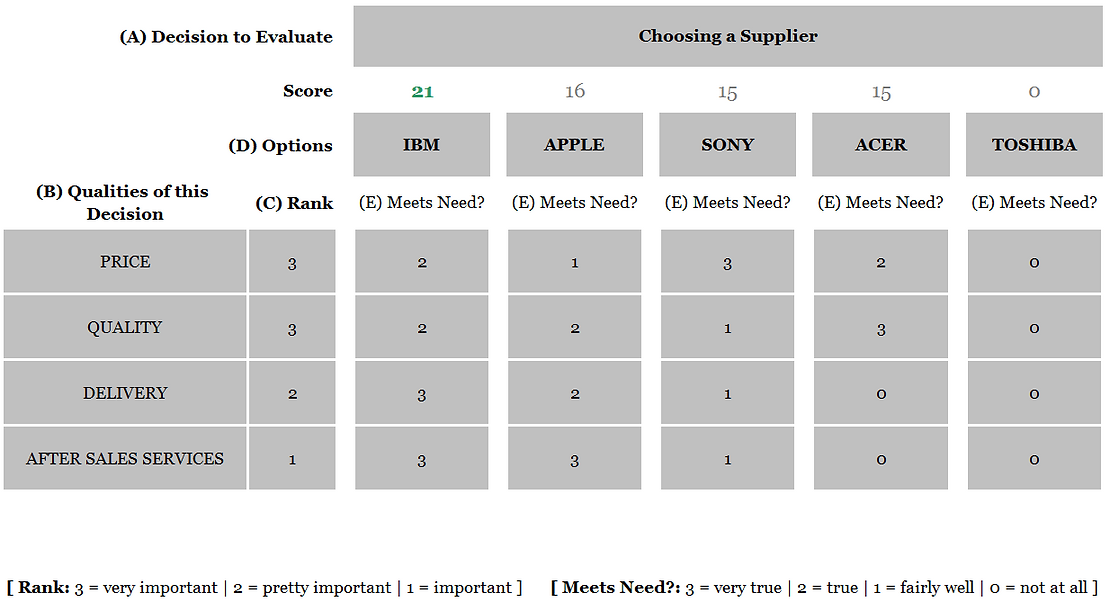
2) Decision matrix analysis: score options with weighted criteria
Managers often compare options using intuition or subjective judgments. Decision matrix analysis replaces that with structured scoring. You list options, choose criteria, assign weights, and compute a total score for each option.
In PPC, criteria might include: expected conversion volume, CPA risk, landing page quality, forecasted impression share, and speed-to-impact. When we used this method for campaigns, we reduced arguments based on gut feeling and focused discussions on measurable trade-offs.

One reason this works is cognitive bias reduction. Instead of being swayed by a single metric (like CTR), Managers can align scoring to business outcomes (like lead quality or revenue). If you’re looking for a practical framework to avoid decision traps, you may also like فن التسويق والإقناع لماذا يشترى القلب, where persuasion influences can be understood and managed during decision cycles.
3) Travelling Salesman thinking: route decisions for budget and resources
The travelling salesman problem (TSP) is about finding the shortest route that visits multiple points. While it’s famous for logistics, the underlying idea is useful for Managers: resource allocation is a routing problem too.
In PPC, your “cities” can be: campaigns, geographies, dayparts, audiences, or landing pages. The goal is to allocate spend so you maximize returns while minimizing waste. Even if you can’t solve the exact optimization, you can borrow the concept: evaluate end-to-end cost and benefit, not just isolated segments.
Manager translation: don’t evaluate campaign decisions in silos. Consider how a change affects downstream performance: the audience you attract determines conversion rate; the landing page you send traffic to determines lead quality; the budget you allocate changes learning speed and statistical confidence. TSP thinking pushes you toward holistic decisions.
4) Decision trees: plan what you do next based on outcomes
Decision trees represent choices as branches with probabilities and outcomes. For Managers, they are valuable because they force planning ahead: “If X happens, we do Y.”
That prevents reactive panic. In PPC, this could mean: if CPA rises due to seasonality, you don’t automatically kill the campaign—you evaluate whether the issue is audience drift, tracking changes, landing page conversion, or competitor pressure.

You can also link decision trees to experiment design. For example, if you run A/B tests on ad copy or landing pages, a decision tree helps you plan responses to outcomes: which variation gets budget, what gets paused, and what becomes the next hypothesis. If you’re interested in how probabilities and experiments can be managed, فن الاقناع بكلمة واحدة استغل سيكولوجيا provides additional context for how messaging decisions can be structured and validated.
Where Managers Should Start: A Simple 30-Minute Decision Routine
If you’re responsible for PPC performance and you want more consistent outcomes, create a routine that makes decision-making repeatable. The goal isn’t to eliminate judgment—it’s to reduce avoidable error.
- Define the decision: budget shift, test stop, landing page change, or new audience expansion.
- Choose criteria: CPA target, conversion rate, lead quality signal, and timeline constraints.
- Apply a rule: stop rule for exploration (optimal stopping), or a scorecard (decision matrix).
- Document the “next step”: decision tree style branching so your team knows what happens if results improve or worsen.
This routine is especially useful for Managers because it aligns team execution with measurable outcomes. It also improves stakeholder trust: people can see why a decision was made and how it will be updated.
Conclusion & CTA
Algorithms don’t remove the human role of Managers—they strengthen it. By using structured decision support (stop rules, decision matrices, routing logic, and decision trees), Managers can reduce bias, improve consistency, and make better PPC choices under time pressure. Start small: choose one decision type you make every week, build a simple framework for it, and review the outcomes with your team.
If you want a deeper perspective on how biases and decision behavior show up in real marketing outcomes, explore أغرب أساليب الإقناع استغل تأثير التكر to understand why certain choices feel compelling—and how to test and manage that influence. Managers who combine that awareness with algorithmic decision routines usually move faster, waste less budget, and learn more from every campaign cycle.
Frequently Asked Questions
How do “algorithms” practically help Managers in Google Ads and PPC planning?
They help by turning decisions into structured comparisons. For example, a decision matrix can score campaign options using weighted metrics (CPA, conversion rate, lead quality). Optimal stopping can define when to pause low-signal tests instead of letting them consume budget. Decision trees help you plan what to do next when results move up or down. The result is more consistent decision-making and fewer bias-driven reversals.
Can these frameworks replace human judgment for Managers?
No. In PPC, Manager judgment is still essential for defining the right criteria, selecting assumptions, and understanding context (budget constraints, business priorities, seasonality, product changes). Algorithms mainly reduce the “error layer” by making the process repeatable and auditable. A good approach is: Managers define the goal and rules, then the model supports the decision with data and structured logic.
What’s the biggest mistake Managers make when they try to use algorithmic thinking for marketing decisions?
Skipping data and tracking validation. If conversion events, attribution windows, or key landing page events are inaccurate, the model will confidently optimize the wrong signals. Another common mistake is using overly complex models too early—when a simple scorecard, stop rule, or branch plan would have delivered the same clarity. Start with one decision type and verify the output against real performance before expanding.